
The challenge that the project addresses
The initiative encourages vegetable gardening in urban communities of the Eastern Cape to improve food sovereignty, well-being and aesthetics, irrespective of one’s socio-economic background. It was born after realising the struggles households are going through to put food on the table and cope with stress, especially after the COVID-19 pandemic which stripped off most family breadwinners of their employment and trampled the country’s economy resulting in high food prices. Consequently, hunger became more pronounced in a province that was already characterised by high food insecurity rates. In response, the initiative supplies gardening inputs; brings hope and nourishes community relations.
What is your project doing to respond to this challenge?
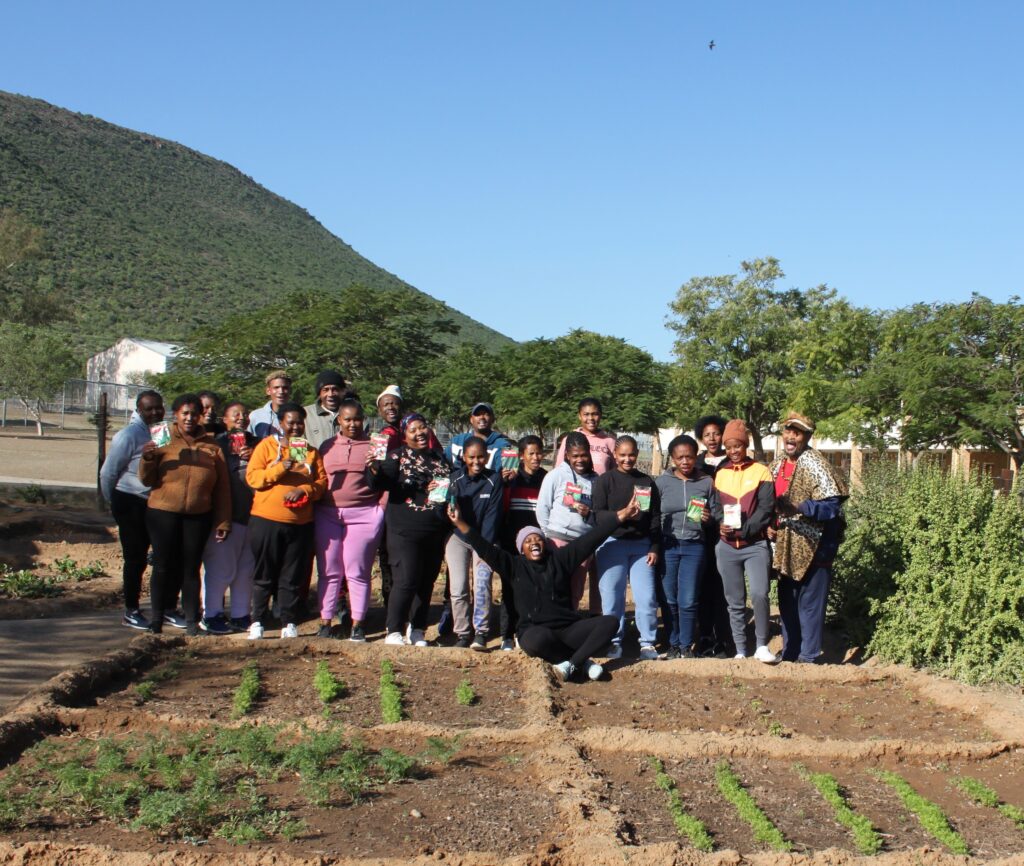
As part of the initiative, we move into communities and interact with household food gardeners (also known as backyard gardeners) and community food gardeners to have a clear understanding of the types of vegetables they grow, how they are benefiting from the practice and the challenges currently faced. We also involve those that would want to start gardening but couldn’t do so before due to various challenges. We do all this with the help of community leaders representing various religious and cultural groups, including indigenous groups. Because financial restrictions to buy seeds and gardening tools, lack of gardening knowledge, shortages of water and the hot temperatures were the frequently mentioned challenges, the initiative responded by supplying good quality seeds, some garden spades and forks, and liaising with a local NGO to provide workshops. The workshops impart knowledge on the appropriate vegetables to plant each season, nutritional benefits of a variety of vegetables, the environmental, physical, social and psychological benefits of gardening. Furthermore, gardeners are also taught how to properly prepare the soil and improve the soil quality using low-cost methods such as making their own compost and applying livestock manure gathered from neighbours who keep animals.
Describe the project's impact
The initiative benefits individual households or families and communities in two Eastern Cape towns, i.e., Port Alfred and Graaff Reinet. Since the initiative has been encouraging schools to actively involve learners in school gardening activities, some junior and high school learners are also benefiting from the effort. In addition, attempts have been made to promote vegetable gardening at some health facilities, to be carried out either by community members or patients, depending on the nature of the facility. Importantly, the initiative is trying to break the stigma associated with gardening among the youth by making gardening a fun adventure.
Across the two towns, the initiative has managed to keep 189 backyard gardens operational for a year through the provision of seeds and gardening tools. It has also seen the establishment of 26 new gardens by individuals who were not previously involved in food gardening. One community garden at a healthcare centre has been revived through collaboration with a non-profit humanitarian development organisation that is actively involved in community upliftment in the province. We are amid some discussions with the same organisation to establish a community garden at one of the high schools after being given a go-ahead by the authorities. We organised a two-day workshop two months ago to equip the gardeners with the basic knowledge and skills needed to garden successfully with the help of a local NGO, and a total of 60 gardeners attended. Other fulfilling impacts the initiative has brought include the excitement gardeners have when they harvest their vegetables. Most of them now take pictures of their harvest and even weigh their harvested vegetables. Some neighbouring gardeners have learned to grow different vegetables so that they can trade and have a wide dietary intake. Others have developed healthy competition on ‘the greenest hands in town’.
To improve the impact of our initiative, the funds will be used to buy more seeds for the gardeners. To date, the distributed seeds were donated by a university department, a local NGO and bought with our personal funds. There has been an outcry from community members in the two towns to establish a ‘demonstration garden’ for inspiration and transfer of expertise from masters in the field. We have been given space to situate such a garden at a health facility in one of the towns and have communicated with individual experts who are willing to be part of it. Therefore, the funds will also be used to set up a demonstration garden. One community suggested the need for a newsletter to allow gardeners to share their experiences and ‘gardening fun’ among themselves and we love the idea. The funds will also be used to mobilise resources for the newsletter.