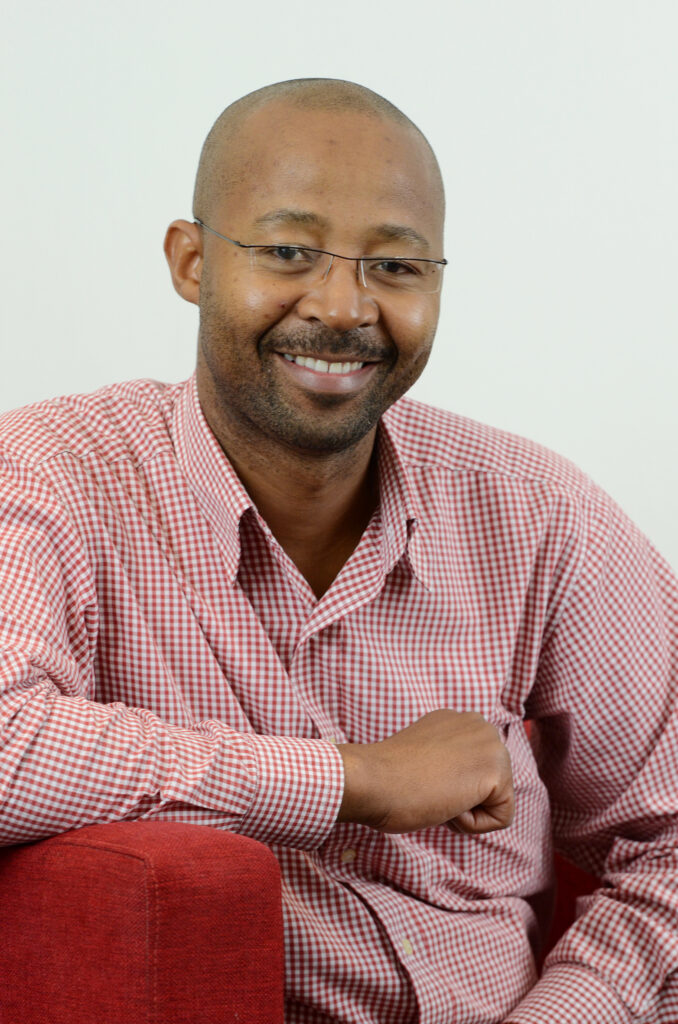
Seeding the Future
Deputy Vice Chancellor, Professor Monwabisi Ralarala is reshaping South African higher education — one radical, inclusive step at a time.
In the ever-changing landscape of South African higher education, few leaders stand boldly at the intersection of innovation, equity, and institutional transformation as Professor Monwabisi Ralarala. His vision is not just about reimagining curricula or expanding access. It is about dismantling the pillars of exclusion and co-creating systems that value lived experience as deeply as academic theory.
At the heart of his approach is an unwavering belief in the power of inclusion. Prof. Ralarala, a proud Canon Collins Trust Alum and appointed Deputy Vice-Chancellor: Academic at the University of the Western Cape, insisted on a radical departure from the traditional top-down design of university curricula.
“Universities have always been associated with ivory towers,” he reflected. “We never valued the knowledge that comes with students.” That changed when a student challenged the academic status quo during a consultation: “If critical thinking doesn’t equip me to build an app, it’s useless.” That moment became a spark, and the program’s foundation was laid on student voice, community engagement, and industry relevance.
The program’s design is a living expression of what Prof. Ralarala calls a co-creation model. It integrates not just academic experts and industry leaders, but students and ordinary community members.
“We’re talking about being inclusive. We’re talking about being diverse in program development,” he said.
But his vision stretches beyond curriculum reform. At a time when South Africa is still grappling with the legacy of apartheid and marginalisation, Prof. Ralarala is also challenging the institutional apathy that keeps Black scholars on the margins. In his new position, he is intentional about building a more just and representative academy. For him, equity is not a policy box to tick. It is a moral and intellectual imperative. “We keep saying there are no Black professors out there,” he said. “Well, let’s make them.” He has played a significant role in clearing the path for the success of black academics and providing scaffolding to ensure success. From this work cross-continental collaborations, joint student programs and new funding opportunities have emerged with likeminded tertiary partners. “This is social justice in the making,” he declares.
His initiatives, from transforming curriculum models and founding innovative leadership programs to championing young Black scholars into senior roles, are not just reforms. They are efforts to rewrite what South African universities value, who they serve, and who gets to lead.
Prof. Ralarala may speak about these ideas with kindness and humility, but their impact is enormous. In a field often stuck in old ways and doubt, his work offers something rare: the hope of a new academic future shaped not by barriers, but by vision, courage, and a deep commitment to justice.